
Reviewed · CABO WHALE WATCHING
Educational Sunrise Whale Watching with Photos Included
Waking up early in Cabo pays off fast. This 3-hour sunrise boat trip is built around a calm start in the bay, using a hydrophone to listen for whales before you head out to search on the open water. Then you ease back in with classic photo stops for the famous Arch and the sea lion area, so your morning isn’t just about spotting spouts—it’s about turning the whole shoreline into a story.
I like the pacing. You don’t rush straight into the search—you first get that hush of the water and a guided explanation while you try to catch whale sounds underwater. I also like the small-group feel (maximum 10 travelers), which makes it easier for the guide and captain to manage the boat and keep everyone focused when the action starts.
One thing to consider: this experience depends on conditions. It needs good weather, and the tour can be adjusted or refunded if it has to be canceled due to poor weather.
In This Review
- Key Details You Can Plan Around
- Sunrise Start: What the 6:00 am Cabo Trip Really Gets You
- Setting the Mood with Hydrophones in a Quiet Bay
- About Two Hours on the Open Ocean: Finding Whales Without the Rush
- Photo Stops That Don’t Feel Like a Checklist
- Learning That Actually Helps You Watch Better
- Who This Tour Fits Best in Cabo
- What to Expect Onboard (and How to Prepare)
- Weather Matters: The Calm Part of Cabo Can Change Fast
- Price and Value: Why 3 Hours Can Feel Like More
- Should You Book This Sunrise Whale Watching with Proyecto Cetáceo?
- FAQ
- How long is the sunrise whale watching tour?
- What time does the tour start?
- Where is the meeting point?
- Is the tour offered in English?
- What is the maximum group size?
- Are service animals allowed on this tour?
- Is this tour suitable for most travelers?
- What happens if the tour is canceled due to poor weather?
- What if I need to cancel—can I get a full refund?
Key Details You Can Plan Around
- 6:00 am start sets you up for sunrise light and calmer conditions
- Hydrophone listening helps you hear whales before you see them
- About 2 hours on the open ocean for whale watching time
- Small group (max 10) keeps the experience more controlled and personal
- Photo stops on the return include Lover’s Beach, sea lions, and the Arch
- English-led tour with on-board guidance throughout
Whale season runs December to April. Here is where we would book
- SMALL GROUP Whale Watch | Cabo San Lucas | Biologist | FREE Pics
★ 5.0 · 1,106 reviews - Humpback Whales in Cabo San Lucas
★ 5.0 · 1,005 reviews - ZODIAC Whale Watch Tour | Cabo San Lucas | Biologist | FREE Pics
★ 5.0 · 365 reviews - Los Cabos Whale Watching (Transportation and Pictures Included)
★ 5.0 · 290 reviews
Sunrise Start: What the 6:00 am Cabo Trip Really Gets You
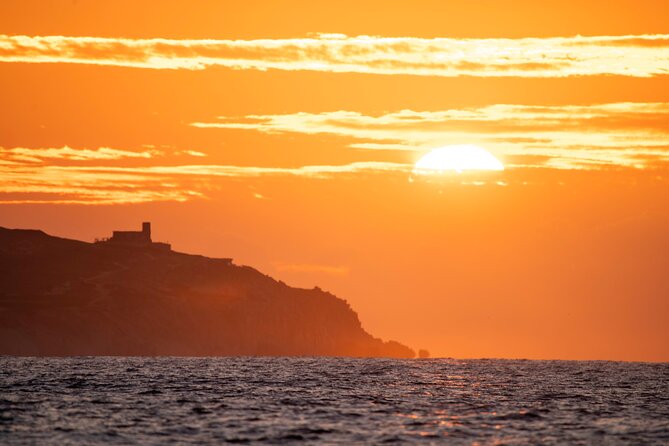
This is one of those Cabo activities where the early alarm isn’t just “for fun.” A 6:00 am departure matters because sunrise light is gorgeous, and the bay often feels calmer before the day fully ramps up. You’ll start from the Cabo San Lucas marina area and head out while the sky is still shifting color—exactly the kind of morning that makes you want to look up even when you’re focused on the water.
The timing also shapes expectations. You’re not signing up for a long day. It’s about three hours total, with real time out searching and a controlled return with land-based photo moments. If you like efficient plans—early start, meaningful wildlife time, then breakfast—you’ll probably enjoy this format.
Bring patience, not a long itinerary. When you’re watching wildlife, you can’t force whale behavior. What you can control is your mindset: dress for cool early mornings, stay present, and let the guide’s process guide you.
Setting the Mood with Hydrophones in a Quiet Bay
Before the open-ocean search begins, you’ll head out and try to find a quieter area in the bay where the boat can set up a hydrophone. This is a big deal in how the experience feels. Instead of only scanning for a whale silhouette, you’re listening for signals under the water while the boat is in a more still moment.
This is also where the “educational sunrise” part becomes real. You’re not just told that whales communicate—you’re given a chance to experience that underwater world. In past runs of the tour, the whale sounds (often described as whale songs) were a standout, especially because the silence of the bay makes even short moments of sound feel intense.
Practical tip: when the crew is trying to listen, give them room to do it. Put your phone away unless the guide says it’s the right moment. You’ll hear more when you aren’t competing with notifications and chat noise.
About Two Hours on the Open Ocean: Finding Whales Without the Rush
Once the hydrophone moment is done, you’ll start looking for whales. You’ll spend roughly 2 hours on the open ocean searching. That time window is thoughtfully sized: long enough to have chances, but not so long that everyone loses focus or energy.
What I like about this approach is that it treats whale watching like a process, not a vending machine. The captain and guide are working together to locate whale activity, and the goal is to get you into positions where you can observe comfortably. If you’re hoping to see whales clearly, the best strategy is simple: stay flexible, keep watching the water surface, and be ready for the moment when the boat slows and everyone’s attention snaps into place.
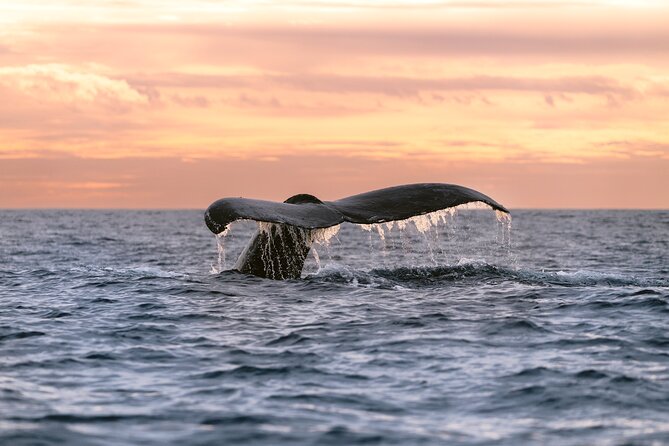
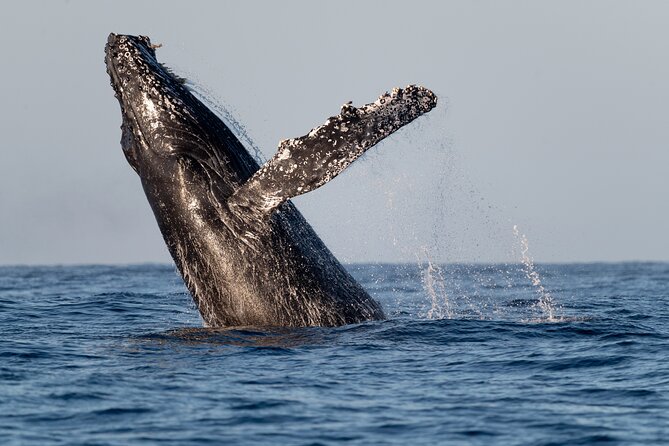
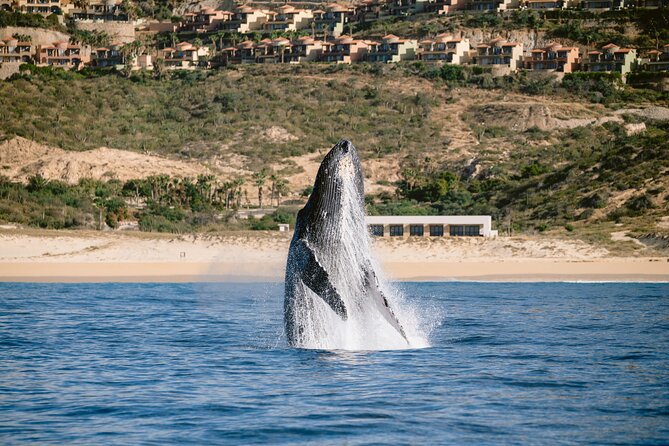
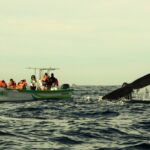
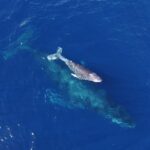
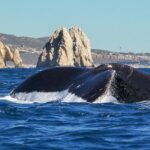
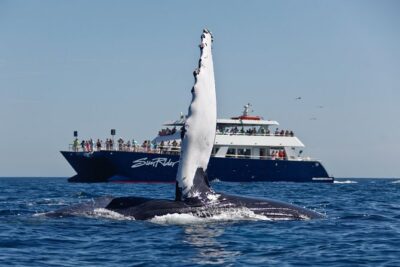
From the experiences people described, sightings can include humpback whales, sometimes with calves—meaning you might catch behavior like breaching or quick surface displays. You shouldn’t count on a specific action, but you can count on the crew to steer you toward the best opportunities they find during that search block.
If you get a whale sighting, here’s the mindset that helps: focus on what the whale is doing right now, not what you hoped it would do. A spout and a slow turn can be just as memorable as a dramatic jump.
Photo Stops That Don’t Feel Like a Checklist
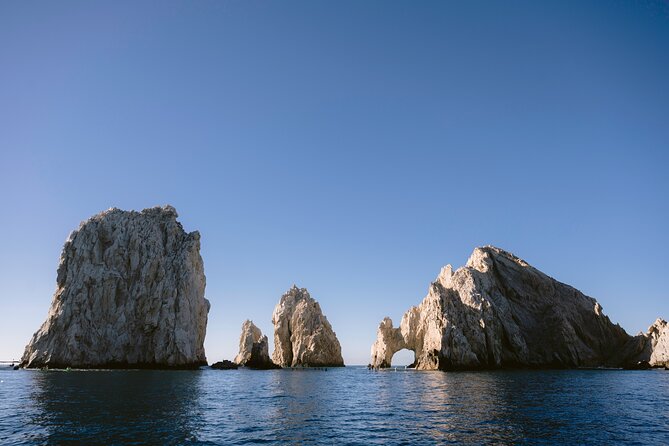
On the way back, the tour shifts from wildlife hunting to shoreline classics. You’ll visit Lover’s Beach, the sea lion colony, and the famous Arch—all with photo opportunities in mind. This is a nice balance. You’re already up for sunrise and wildlife, so it’s satisfying to end the trip with iconic Cabo views you can actually frame.
Lover’s Beach is one of those areas where the coastline look is part of the experience. It’s a good place for quick pictures because the light from the morning has a softer feel than midday sun.
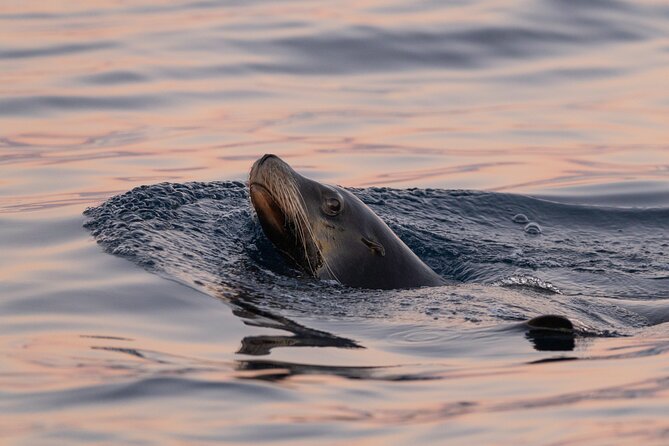
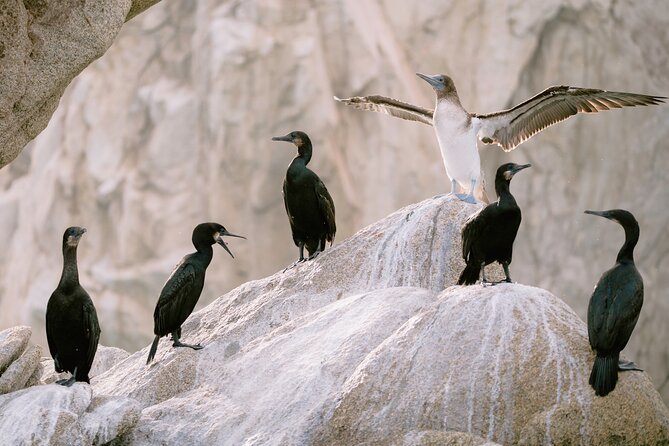
The sea lion colony stop adds a different kind of animal energy. Even if you’re primarily there for whales, seeing sea lions up close changes the “wildlife mood” without needing the ocean to be perfect. And because the tour is only about 3 hours total, these stops are practical—enough time to get photos and soak it in, without stretching the day.
Finally, the Arch is the Cabo postcard moment. The key is to treat it like a photo stop, not a lecture topic. You’ll get the view, snap your shots, and move on.
A handful more around Los Cabos we would happily send a friend to

Learning That Actually Helps You Watch Better
What makes this feel more than a standard whale watch is the way the guide time supports your attention. In the experience descriptions, the guide Angelica was praised for being both friendly and highly engaged, pairing clear explanations with what the captain is doing on the water.
I like tours that connect observation to meaning. If someone helps you understand why whales surface, how sound can travel underwater, or what to watch for during the search, you get more from each sighting—whether it’s a clear view or just a distant blow.
And the captain’s role matters here. You’re not just sitting on a boat. The crew works to put the group in the right place for listening and then for viewing. When you see that coordination firsthand, you feel it in the flow: the boat slows at key moments, the group turns its attention together, and you’re not left guessing what to do next.
Who This Tour Fits Best in Cabo
This one is ideal if you want a morning experience that mixes nature and real education—without spending a whole day commuting, waiting, and dragging yourself around town afterward.
It’s especially good for:
- Couples and small groups who want wildlife time and photo time in one trip
- People who enjoy early mornings when the world feels quieter
- Anyone who likes learning simple, practical things about animal behavior and communication
It’s also a solid pick if you’re visiting Cabo for the first time and want to tick off a few major sights without turning it into a full-day tour. You’ll do whales early and still get the Arch and sea lion photo moments before the day changes too much.
And for families: most travelers can participate, and the group is capped at 10, which can make the experience less chaotic than larger boats. If you’re traveling with young kids, it can still work well—just remember you’re starting at 6:00 am, so plan for early wake-up.
What to Expect Onboard (and How to Prepare)
You’re going out from the Cabo San Lucas marina, starting early, and spending the main chunk of time actively searching. That means you’ll want to plan for a typical sunrise boat routine: cooler air at the start, open ocean viewing, and movement.
Practical preparation ideas:
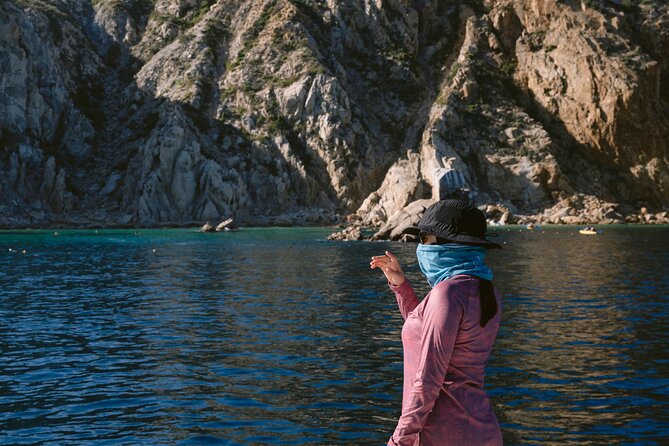
- Dress in layers for early morning chill
- Bring something for wind (a light jacket often does the job)
- Have your camera ready, but don’t keep it glued to your hands—give your eyes time to scan
- When the guide is explaining or setting up listening, reduce distractions so you can actually take it in
Also, note that service animals are allowed, so if that applies to your group, you can plan without extra worry.
If you’re sensitive to motion, bring what you normally use for boat rides. The tour is not described as having long rough travel blocks, but open ocean time means the water can be unpredictable.
Weather Matters: The Calm Part of Cabo Can Change Fast
This is a weather-dependent outing. The tour requires good weather, and if it’s canceled due to poor conditions, you’ll be offered a different date or a full refund. That’s important because whale watching is already a “conditions + luck” activity, and they’re clear that the experience needs a workable day.
What I recommend is simple: check the forecast the night before and the morning of. Also, come with a backup plan for the rest of your day. Even when the tour runs, mornings can change quickly, and flexible planning keeps you happy.
Because the experience starts at 6:00 am, you’ll want your decision-making early too—so having the mental ability to roll with a schedule change helps.
Price and Value: Why 3 Hours Can Feel Like More
There’s no price listed in the details you provided, so I can’t judge cost. But I can judge value based on structure and what you’re getting.
For my money, the big value points are:
- Small group size (max 10), which helps the captain and guide manage viewing
- A real “listening first” moment with a hydrophone, not just a drive out and hope
- About 2 hours of open-water searching so you’re not rushed
- Return stops that hit major Cabo icons—Lover’s Beach, sea lions, and the Arch—for easy photo payoff
In other words, the tour isn’t only “whales, maybe.” It’s whales plus a guided learning start plus meaningful shoreline stops, all within a compact timeframe. For many people, that’s the sweet spot: early effort, memorable results, and a chance to enjoy the rest of Cabo afterward.
Should You Book This Sunrise Whale Watching with Proyecto Cetáceo?
If you’re excited by early mornings, you like learning while you watch, and you want whales plus classic Cabo photos in one tight trip, I think this is a strong yes. The standout parts are the quiet-bay hydrophone start and the way the captain and guide help you focus when whales are near—moments like whale sounds and sightings that can include humpbacks and even calves are the kind of payoff that makes getting up early worth it.
If you hate early starts or you’re traveling during a time when weather could be unreliable, I’d be cautious. You’re signing up for an experience that needs good conditions, and while cancellations are handled with a refund option, the early departure still takes planning.
Bottom line: book it if sunrise wildlife and a small-group vibe are your thing—and if you can be flexible with weather.
FAQ
How long is the sunrise whale watching tour?
The tour is approximately 3 hours.
What time does the tour start?
The start time is 6:00 am.
Where is the meeting point?
The meeting point is Proyecto Cetáceo, Blvd. Paseo de la Marina, Centro, 23410 Cabo San Lucas, B.C.S., Mexico.
Is the tour offered in English?
Yes, it is offered in English.
What is the maximum group size?
The tour/activity has a maximum of 10 travelers.
Are service animals allowed on this tour?
Yes, service animals are allowed.
Is this tour suitable for most travelers?
Yes, most travelers can participate.
What happens if the tour is canceled due to poor weather?
If it’s canceled due to poor weather, you’ll be offered a different date or a full refund.
What if I need to cancel—can I get a full refund?
Yes. You can cancel up to 24 hours in advance for a full refund. If you cancel less than 24 hours before the start time, the amount you paid will not be refunded.
More Whale Watching in Cabo San Lucas
More Tour Reviews in Cabo San Lucas



Whale Watching Around Cabo
Just added to our Los Cabos notebook

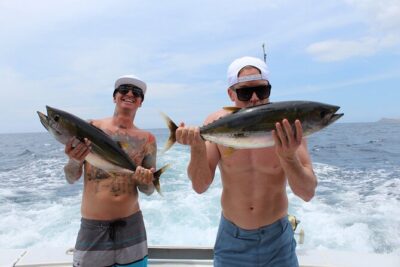
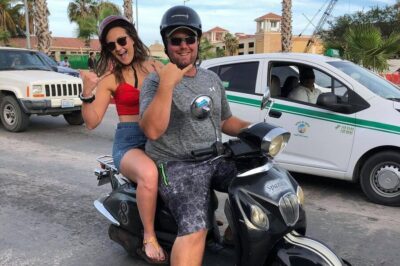

Cabo Whale Watching, compared.
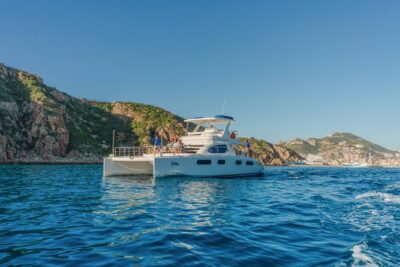 ★ 5.0Luxury Catamaran Whale Watching Cabo San LucasFrom $1292,107 reviews
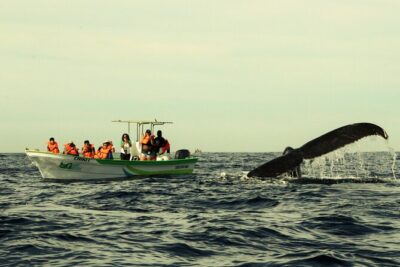 ★ 5.0Whale Watching Cabo-Women crew-Sightings Guaranteed & Free PhotosFrom $1001,743 reviews
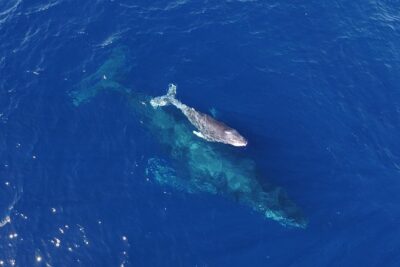 ★ 5.0SMALL GROUP Whale Watch | Cabo San Lucas | Biologist | FREE PicsFrom $1091,106 reviews
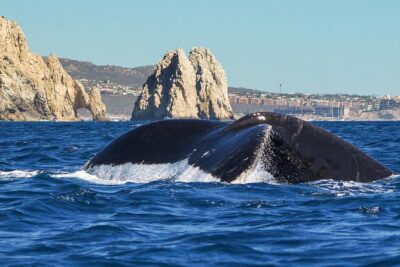 ★ 5.0Humpback Whales in Cabo San LucasFrom $991,005 reviews
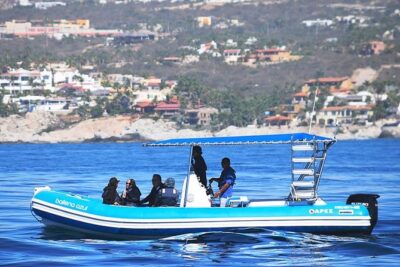 ★ 5.0ZODIAC Whale Watch Tour | Cabo San Lucas | Biologist | FREE PicsFrom $109365 reviews
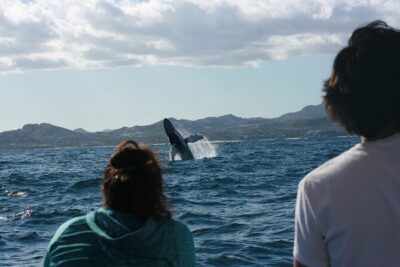 ★ 5.0Whale Watching Group Tour in San Jose del CaboFrom $99243 reviews
 ★ 5.0Cabo San Lucas Whale Watching Lunch CruiseFrom $115197 reviews
 ★ 5.0Whale Watching in Cabo San Lucas: Sightseeing Cruise and ShoppingFrom $115185 reviews
Browse the lists this tour appears in