
Reviewed · CABO WHALE WATCHING
Cabo San Lucas: 2-Hour Whale Watching Adventure
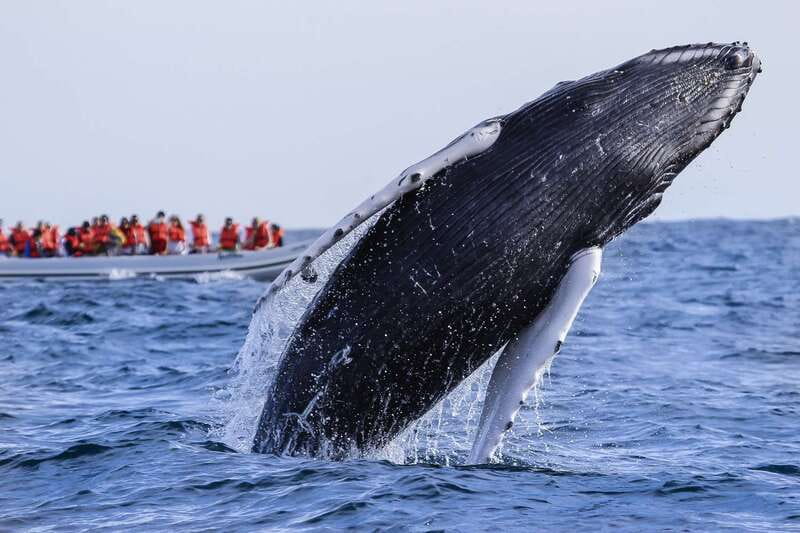
Whales are close enough to hear. On this Los Cabos cruise, you’ll ride a whale-friendly inflatable boat out to humpbacks and dolphins, with one standout perk: the onboard hydrophone so you can listen to whale communication underwater. It’s designed for fast, efficient spotting during the prime season.
The vibe is also more personal than the big-boat scene. You travel in a small group, get a safety briefing before you head out, and you’re not stuck watching other boats from a distance while the whales do their thing.
One thing to weigh: this is open-water time with no bathrooms on board. You’ll want to dress for cool breezes and be ready for a hands-free, all-adventure kind of outing.
In This Review
- Key Things That Make This Cabo Whale Trip Worth Your Time
- Humpback Season in Los Cabos: When You’ll Actually Find Whales
- Boarding the Whale-Friendly Inflatable Boat (and Why Soft Matters)
- How the Van Pickup and Timing Works in the Real World
- On the Water: Following Whales, Spotting Dolphins, and Seeing the Show
- Hydrophone Time: Listening to Whale Communication Underwater
- Snacks, Bottled Water, and the On-Board Comfort Reality
- Price and Value: Is $99 Worth It?
- What to Bring for Cabo Weather and Wet-By-Accident Moments
- Who This Tour Fits Best (and Who Should Skip It)
- What the Marine Guide Adds to the Experience
- Should You Book This Cabo San Lucas 2-Hour Whale Watching Adventure?
- FAQ
- When is the best time to see whales on this Cabo San Lucas tour?
- Where are the pickup locations?
- How long is the whale watching portion?
- What’s included in the price?
- What extra fees should I budget for?
- What languages are the guides?
- What should I bring?
- Is this tour suitable for children?
- Who should not book this experience?
- Are there bathrooms on board?
Key Things That Make This Cabo Whale Trip Worth Your Time
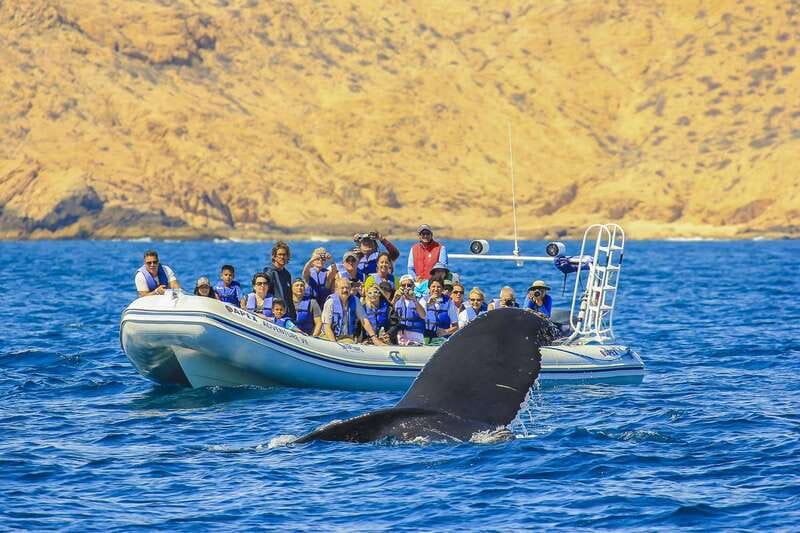
- Hydrophone listening: You can hear whale communication using onboard hydrophone technology.
- Small groups: More intimate spotting and less time feeling like you’re part of a traveling crowd.
- High-speed inflatable boats: Fast access to where whales are showing up, plus soft, whale-friendly design.
- Mid-December to mid-April season: Your best odds for migrating humpbacks in the Cabo area.
- Breaches and dolphin action: Watch for natural acrobatics and lively dolphin frolics during the same session.
Whale season runs December to April. Here is where we would book
- SMALL GROUP Whale Watch | Cabo San Lucas | Biologist | FREE Pics
★ 5.0 · 1,106 reviews - Humpback Whales in Cabo San Lucas
★ 5.0 · 1,005 reviews - ZODIAC Whale Watch Tour | Cabo San Lucas | Biologist | FREE Pics
★ 5.0 · 365 reviews - Los Cabos Whale Watching (Transportation and Pictures Included)
★ 5.0 · 290 reviews
Humpback Season in Los Cabos: When You’ll Actually Find Whales
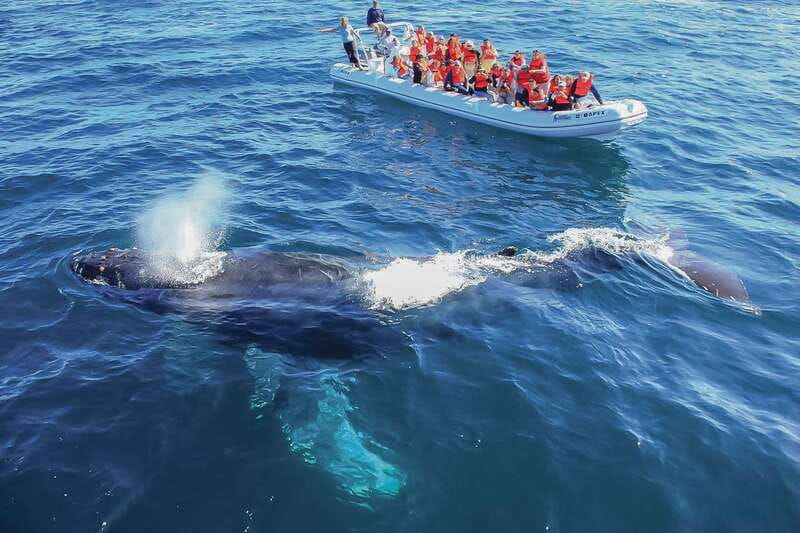
If you’re planning Cabo San Lucas whale watching, timing is everything. This trip focuses on the months when migrating whales pass through the waters of Los Cabos: mid-December through mid-April. That’s the window when humpbacks are the main event and dolphins are commonly spotted around the same waters.
Why it matters: whales don’t follow an itinerary. They move based on their own routes and behavior, so the best tour experience comes from going when the species are most likely to be nearby. This cruise is built around that reality, with guides who help you interpret what you’re seeing rather than treating the ocean like a theme park.
Boarding the Whale-Friendly Inflatable Boat (and Why Soft Matters)
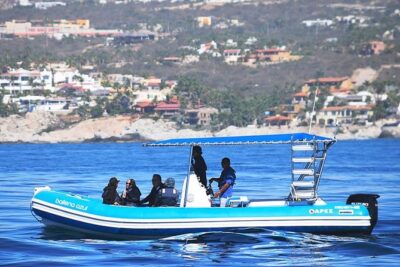
You’ll cruise on a comfortable, high-speed inflatable boat that’s specifically described as safe and whale friendly. Unlike hard-hulled boats, the inflatable and soft design is meant to reduce the stress on the animals, while still giving you the performance you need to reach sightings quickly.
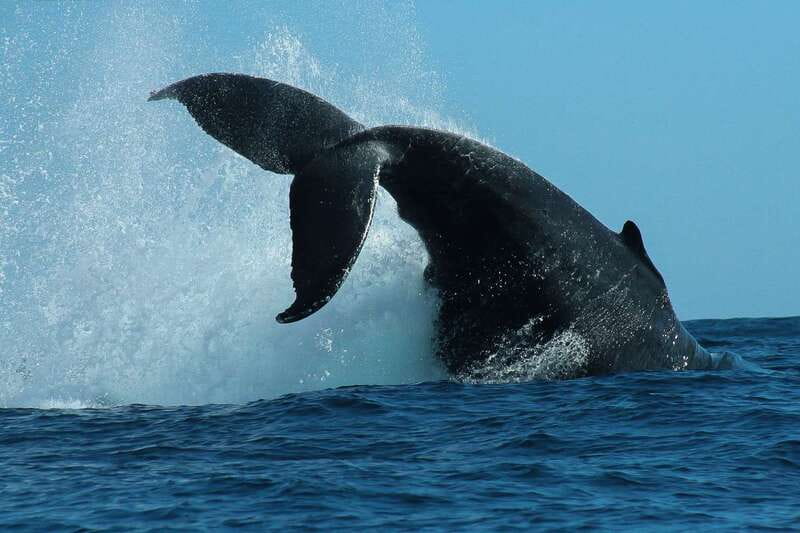
The boat type also affects your viewing angle. When whales surface close to the route, you want to be in a position where you can watch and photograph without a long delay. The tour’s approach is to move efficiently so you get real time with the action—breaches, tail slaps, and playful surface behavior—rather than just “passing by.”
The other practical win: before you push off, you’ll get a safety briefing. That helps if you’re not used to being on a small, fast vessel. Keep in mind you must be able to walk and board without assistance.
How the Van Pickup and Timing Works in the Real World
Your day starts with pickup options in the Cabo area: San José del Cabo or Cabo San Lucas. The schedule includes van transportation, listed at about 1.5 hours, with scenic views along the drive.
Here’s the practical part: since the day includes both land transport and time on the water, you should plan your morning with buffer. Even if the tour is listed as about 2 hours total, the on-the-water portion is shown as roughly 2.25 hours in the tour flow. Translation: you’re committing to a chunk of your day, so don’t stack it back-to-back with something tight.
Once you arrive, you’ll be guided through the key setup steps, including the safety briefing, and then it’s straight into the search-and-sighting part.
On the Water: Following Whales, Spotting Dolphins, and Seeing the Show
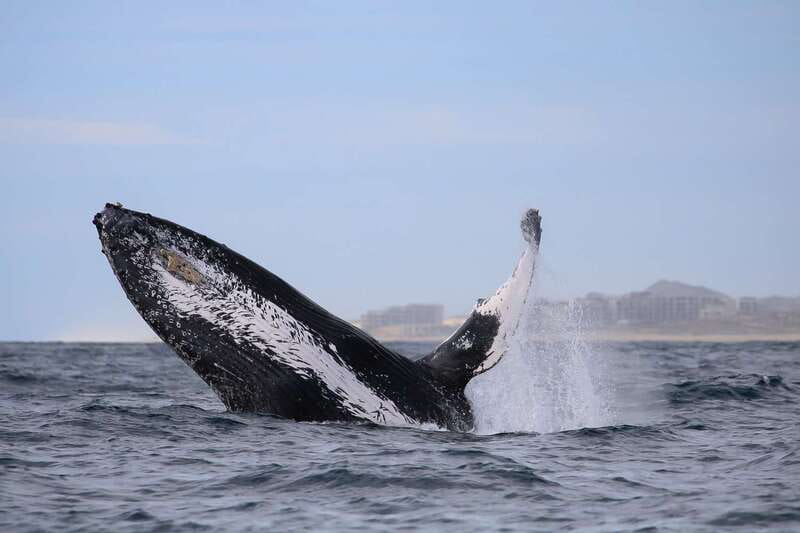
What makes this cruise feel different from generic whale tours is the philosophy: the whales and dolphins are in charge. You’re not driving the schedule; you’re following the animals as they swim, play, and put on natural displays.
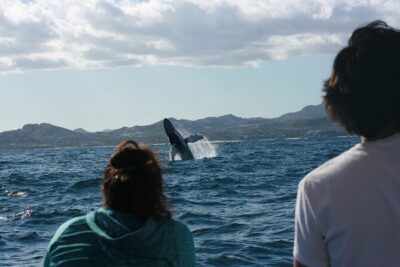
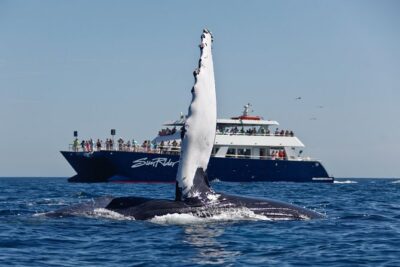
When humpbacks are active, you can look for multiple behaviors in one outing, including breaching and playful surface moments. Dolphins often show up as support acts—faster, noisier, and sometimes more unpredictable. Together, they can turn the cruise into a steady stream of sightings rather than a single “one-and-done” event.
And the “close” factor is real. The boats are designed so whales can be seen just yards away when they approach the area. That’s a big deal for photography and for simply enjoying the scale of the animals without a long distance haze.
A handful more around Los Cabos we would happily send a friend to


Hydrophone Time: Listening to Whale Communication Underwater
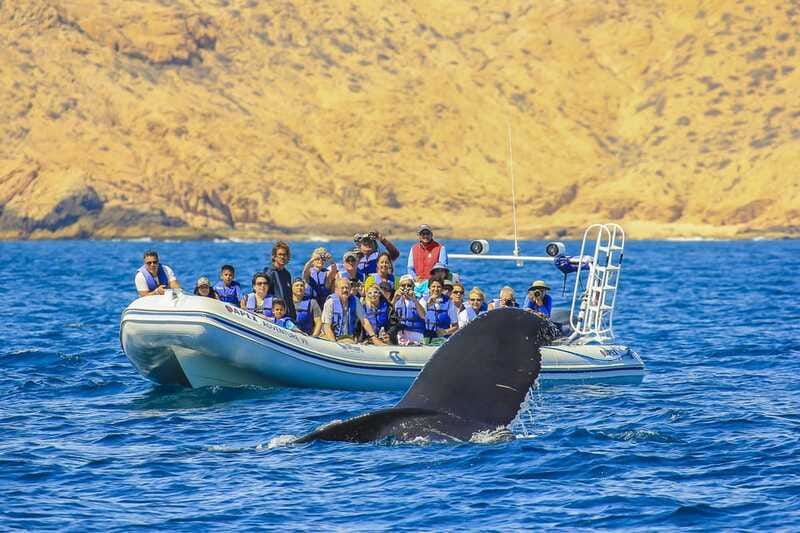
This is the most memorable tech detail on the trip. You can use an onboard hydrophone listening system to hear whale communication underwater. Even if you’ve never done anything like this before, it adds a whole layer beyond spotting.
Why it’s valuable: when you watch humpbacks surface, you’re seeing behavior. The hydrophone helps connect that behavior to communication and lets you appreciate the whales as active, social creatures—not just large silhouettes on the water.
It also works as a calm anchor during the ride. When the action slows or you’re scanning the horizon, hydrophone time gives you something meaningful to focus on. If you enjoy science-meets-nature experiences, this feature is a big reason to pick this specific style of tour.
Snacks, Bottled Water, and the On-Board Comfort Reality
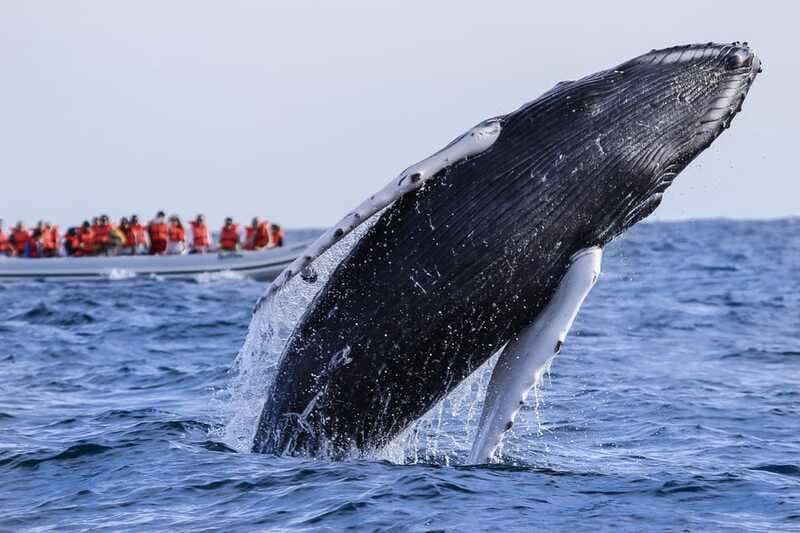
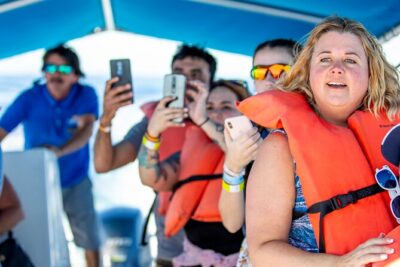
You’ll be out on small-watercraft for the better part of your experience, so comfort details matter. This tour includes snacks and bottled water during the cruise.
On the comfort side, there are also constraints you should plan around:
- No bathrooms on board
- You may get splashed depending on sea conditions
- You’ll need warm gear because winter breezes can feel sharp on the water, even when the coast looks sunny
This is the kind of tour where “pack light, dress smart” beats overpacking.
Price and Value: Is $99 Worth It?
At $99 per person, this whale watching option isn’t the cheapest thing in town, but it also isn’t priced like a luxury private yacht. For the money, you’re paying for a setup that aims at quality sightings: a small-group format, high-speed inflatable access, an onboard marine guide, and the hydrophone experience.
You should also understand the extra fees that come due at check-in:
- A $10 USD round-trip transportation fee for adults (and $5 for children)
- A $2 USD dock fee per person
So, your true all-in cost is higher than the base $99 headline price. Still, the value can hold up well if you care about being closer to the action, learning what you’re seeing from a guide, and using the hydrophone rather than just standing and waiting.
If you’re the type of traveler who hates large group chaos and prefers a focused nature experience, this price starts to make sense fast. If you only want a casual, low-cost boat ride with any chance of seeing whales, you might compare alternatives.
What to Bring for Cabo Weather and Wet-By-Accident Moments
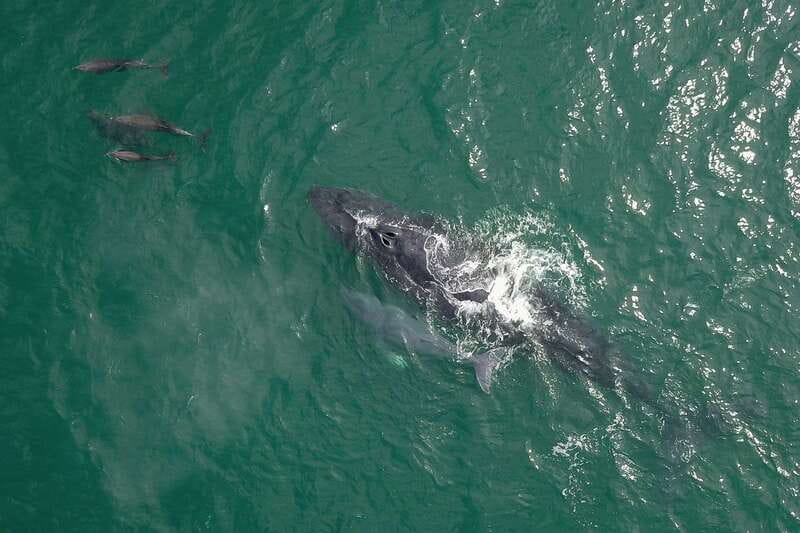
This tour gives you the big nature payoff, but you have to meet it halfway with smart packing. You’ll want:
- Warm clothing (it can feel colder and windier once you’re on the water)
- Sunglasses
- A sun hat
- A camera
- A jacket
- Extra cash (useful for photos if you want them)
Also consider that you might get wet. The tour notes that you should bring suitable clothes in case you splash. If you’re wearing anything that you hate getting salty or damp, plan a backup layer.
One more practical tip: bring something small and secure for your phone/camera. You’ll likely spend time watching, scanning, and photographing, and you don’t want to juggle gear while you’re trying to track a surfacing whale.
Who This Tour Fits Best (and Who Should Skip It)
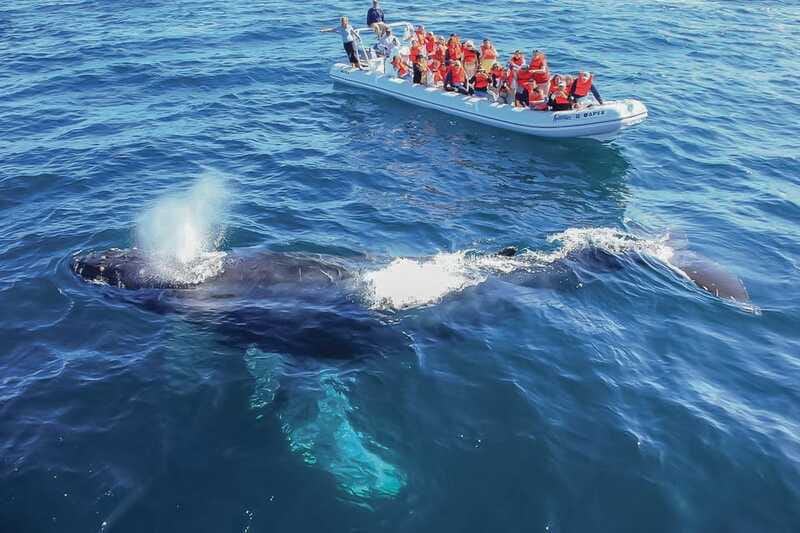
This is a great choice if you want a more hands-on whale watching experience in Cabo: small group energy, an inflatable boat designed for whale friendliness, an experienced marine guide, and the hydrophone feature.
But it’s not for everyone. The trip has clear restrictions:
- Minimum age is 5 years
- Pregnant guests may not participate
- Not suitable for people with back or neck surgery or injuries
- Guests must be able to walk and board the boat without assistance
- Not suitable for wheelchair users or people with mobility impairments
- No bathrooms on board
If you’re traveling with someone who has mobility limitations or relevant medical concerns, it’s worth asking detailed questions before booking. If you’re not sure whether cold exposure or fast boat movement will bother you, think realistically about your comfort level on small, high-speed vessels.
What the Marine Guide Adds to the Experience
A big part of whale watching is not just spotting, but understanding what you’re seeing. This cruise includes a marine guide, and the overall tone is described as professional and enthusiastic. You’ll also get a safety briefing before heading out.
For your enjoyment, the guide’s job is to help you connect the dots:
- where whales are likely to show up during the season
- what different whale behaviors look like from the boat
- how to watch efficiently without losing time
That matters because whales can surface briefly. When you know what to look for, you don’t just watch—you catch the moments.
Should You Book This Cabo San Lucas 2-Hour Whale Watching Adventure?
I’d book it if you meet three conditions: you’re traveling between mid-December and mid-April, you want close-up sightings from a small-group inflatable boat, and you’re excited about the hydrophone feature—not just the view.
I’d skip it (or look for another format) if you need accessible boarding, have restrictions related to pregnancy or certain back/neck injuries, or you’re uncomfortable being on open water with no bathrooms.
If you want a whale cruise in Cabo that feels efficient, focused, and built around actually seeing humpbacks and dolphins rather than just hoping, this one is a strong fit.
FAQ
When is the best time to see whales on this Cabo San Lucas tour?
The tour is designed for migrating whales in the waters of Los Cabos from mid-December to mid-April.
Where are the pickup locations?
Pickup is available from San José del Cabo and Cabo San Lucas.
How long is the whale watching portion?
The schedule lists the whale watching and boat cruise portion at about 2.25 hours, and the activity duration is listed as 2 hours.
What’s included in the price?
You get a marine guide and onboard hydrophone technology.
What extra fees should I budget for?
You’ll need to pay a $10 USD round-trip transportation fee for adults (and $5 for children) plus a $2 USD dock fee per person at check-in.
What languages are the guides?
The tour guide provides information in Spanish and English.
What should I bring?
Bring warm clothing, sunglasses, a sun hat, a camera, and a jacket. Also bring extra cash and clothes in case you get wet.
Is this tour suitable for children?
The minimum age is 5 years.
Who should not book this experience?
It isn’t suitable for pregnant guests, wheelchair users, and people with back or neck surgery or injuries, and guests must be able to walk and board the boat without assistance.
Are there bathrooms on board?
No, there are no bathrooms on board.
More Whale Watching in Cabo San Lucas

More Tour Reviews in Cabo San Lucas



Whale Watching Around Cabo
Just added to our Los Cabos notebook



Cabo Whale Watching, compared.
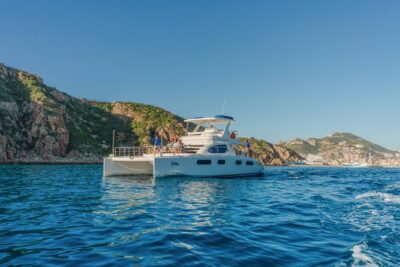 ★ 5.0Luxury Catamaran Whale Watching Cabo San LucasFrom $1292,107 reviews
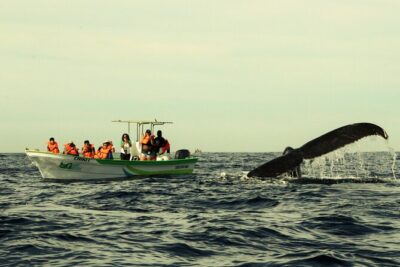 ★ 5.0Whale Watching Cabo-Women crew-Sightings Guaranteed & Free PhotosFrom $1001,743 reviews
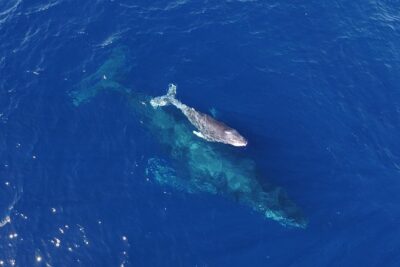 ★ 5.0SMALL GROUP Whale Watch | Cabo San Lucas | Biologist | FREE PicsFrom $1091,106 reviews
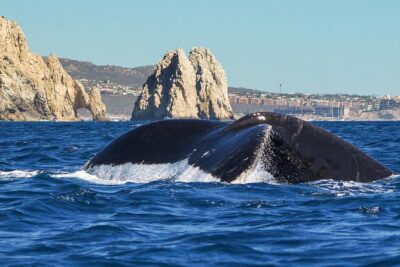 ★ 5.0Humpback Whales in Cabo San LucasFrom $991,005 reviews
 ★ 5.0ZODIAC Whale Watch Tour | Cabo San Lucas | Biologist | FREE PicsFrom $109365 reviews
 ★ 5.0Whale Watching Group Tour in San Jose del CaboFrom $99243 reviews
 ★ 5.0Cabo San Lucas Whale Watching Lunch CruiseFrom $115197 reviews
 ★ 5.0Whale Watching in Cabo San Lucas: Sightseeing Cruise and ShoppingFrom $115185 reviews
Browse the lists this tour appears in