Reviewed · SCUBA DIVING IN CABO
PADI Open Water Course in Cabo San Lucas
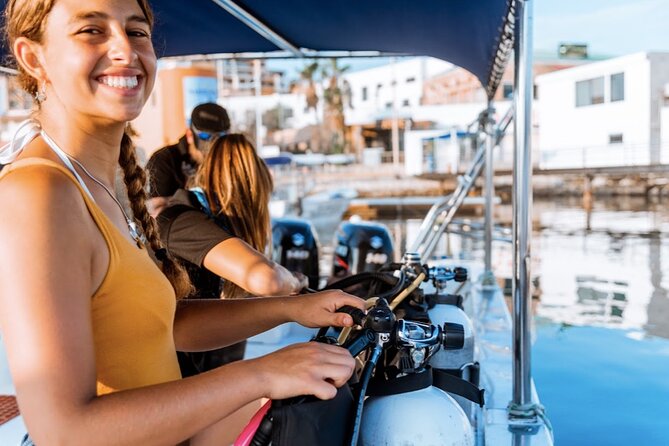
Cabo turns first-timers into certified scuba students. This PADI Open Water Course in Cabo San Lucas uses the dramatic spot where the Sea of Cortez meets the Pacific Ocean, plus a famous rock formation that looks good both from shore and underwater. I especially liked the small group size (up to 4) and the way instruction centers on patient, step-by-step coaching from instructors like Fabiano and Johnny.
One thing to plan for: the course has two long practical days in and out of the water, and it depends on good weather, so the ocean can be a bit of a wildcard at first.
In This Review
- Key highlights I’d use to choose this course
- Why Cabo San Lucas is a good place to start Open Water
- Course format: eLearning, pool skills, and 4 open-water skill sessions
- Day-by-day schedule with the 8:00 am start
- eLearning that fits real vacation schedules
- Pool practice that builds comfort before the ocean
- Instructors: calm coaching, clear explanations, and real patience
- What ocean training means in Cabo (and what you should watch for)
- Group size and why it changes everything
- Price and value: is $620 worth it?
- Who this course is best for
- A few practical notes before you go
- Should you book the PADI Open Water Course with Dive Ninja Expeditions in Cabo?
- FAQ
- How long is the PADI Open Water course in Cabo San Lucas?
- What is the price per person?
- When do I meet the instructor?
- What does the course include?
- How long does eLearning take?
- How many people are in the group?
- What if weather is poor?
- What is the cancellation policy?
Key highlights I’d use to choose this course
- Max 4 travelers means you get more focused attention during skill practice and equipment setup.
- eLearning first, then instructor review lets you finish theory on your own schedule (6–10 hours).
- Pool skills in the morning before any open-water training helps you get your body comfortable fast.
- Two instructors on the ground support the process: an instructor for guidance and a dive-master-level team presence mentioned in feedback.
- Instructors for real-life confidence-building, with stories of support for seasickness and nerves on day one.
- Cabo’s setting is part of the lesson, with that Sea of Cortez–Pacific meeting point and rock scenery adding meaning to every skill.
Two-tank days and dive courses around Cabo, ranked
- Beginner Scuba Diving in Cabo San Lucas
★ 5.0 · 247 reviews - 3-Tank Scuba in Marine Reserve and Corridor for Certified Divers
★ 5.0 · 196 reviews - 2 Tank Dive – Certified Divers (Santa Maria Bay & Chileno Bay)
★ 5.0 · 162 reviews - Private Jeep Tour Cabo Pulmo
★ 5.0 · 87 reviews
Why Cabo San Lucas is a good place to start Open Water
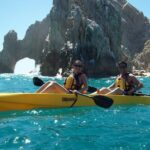
Cabo San Lucas sits where the Sea of Cortez meets the Pacific Ocean, which is exactly why your training feels tied to a real diving environment instead of just paperwork and tank-fiddling. The peninsula setting and the rock formation at the edge of it create a sense that you’re learning in the middle of something iconic.
For you, that matters because Open Water certification isn’t only about rules. It’s about building calm control: breathing, buoyancy basics, and using equipment smoothly while your surroundings are actively happening.
Course format: eLearning, pool skills, and 4 open-water skill sessions
This course follows the standard PADI structure: theory, practice, then ocean training to finish certification. The theory portion happens through eLearning, and it can take 6–10 hours depending on your pace and how quickly you finish quizzes and exams.
Once your eLearning is done, you meet with an instructor for a review, then you learn how the equipment works in a way that’s meant to stick. After that, you shift into the pool for hands-on practice before you head out for the certification requirements in the sea.
What you’re really buying here is time on skills, not just a certificate handout. If you like learning by doing, this format is a strong fit because it repeats the cycle: explain, practice, refine, and then apply it in open water.
Day-by-day schedule with the 8:00 am start
Plan around a 2 days / 6 hours-ish flow (the course details describe a full practical schedule across two days, with a start time of 8:00 am). You meet at Dive Ninja Expeditions, Ignacio Zaragoza 345 Esq, 16 de Septiembre, Downtown, Centro, 23450 Cabo San Lucas, B.C.S., Mexico.
The practical days run like this:
- You meet at 8:00 am, then head to the pool to practice skills.
- After lunch, you go out at 1:00 pm for two open-water training sessions.
Across the two days, you complete four open-water sessions total to qualify for certification. If you’re the type who learns better when you get a few chances to try things before the ocean gets involved, the “pool first” rhythm is a real advantage.
eLearning that fits real vacation schedules
The biggest scheduling lever here is that you can start the eLearning any time and finish it before meeting the instructor. The time estimate is 6–10 hours, and you’ll want to complete all quizzes and exams before your first pool day.
For me, the smart move is to treat eLearning like a prep kit, not like a last-minute hurdle. If you arrive on day one already familiar with concepts and equipment terms, the in-person time feels lighter and more productive.
Also, your confirmation comes at booking, and you’ll get a mobile ticket, which makes it easier to manage travel-day logistics.


Pool practice that builds comfort before the ocean
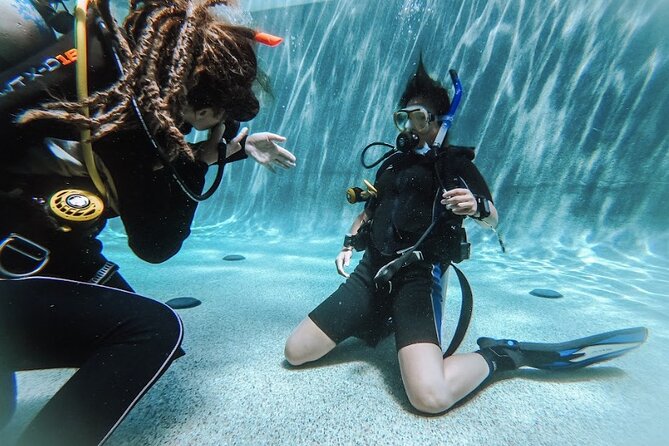
The practical portion includes a pool setup where you practice key scuba skills and get used to the equipment. One student noted that the pool refresh covered most skills, but equalization was something they still needed to practice, which is a helpful reminder for your own preparation.
If you’ve never done scuba before, the pool time is where you figure out how it feels to control breathing, manage gear, and move with purpose. You’re not just “getting in the water.” You’re learning how to do the basics in a controlled environment so the sea part doesn’t feel like a jump into chaos.
Instructors: calm coaching, clear explanations, and real patience
This is where this course earns its high marks. In feedback, instructors like Fabiano (Fab), Fabien, Johnny, Le Roux, and Joy come up repeatedly for being patient and supportive—especially when students feel tense or physically uncomfortable early on.
One strong example: someone doing a reactivation after years away mentioned a smooth pool refresher experience with Le Roux. Another person described a tough first day with seasickness and a small panic moment, but the instructor handled it with patience and kept the focus on safety and step-by-step progress. That kind of coaching is exactly what you want when you’re learning something that can feel scary if you’re rushing.
There’s also a recurring theme of clear instruction. If you prefer lessons where you’re not left guessing, that matches what students experienced with instructors like Johnny and Fabien—friendly, attentive, and focused on making sure you understand.
Language-wise, one instructor mentioned speaking French, English, and Spanish, which is useful if you’re trying to get explanations in a language you’re comfortable with.
What ocean training means in Cabo (and what you should watch for)
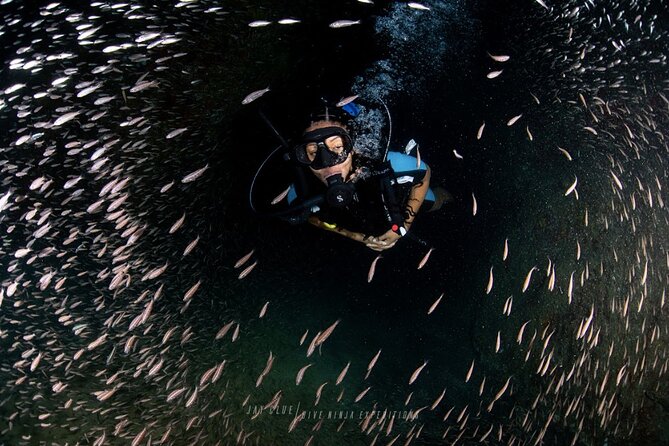
Ocean training here isn’t presented as a thrill ride. It’s presented as the final step that proves you can apply skills in open water. And in Cabo, that environment is genuinely interesting: the coastlines and the rock formation provide a sense of scale, and the meeting of two bodies of water makes the whole area feel like a real system rather than a generic training site.
Still, there’s a practical side. The experience requires good weather, and the ocean can affect how you feel. If motion is a concern for you, it’s worth knowing that support is available and the team prioritizes safety. That same safety-first approach showed up when someone needed extra emotional support on day one and then improved quickly once they felt more secure.
Group size and why it changes everything
With a maximum of 4 travelers, the course naturally leans more personal than big-shop training days. When you have fewer people in the mix, you get more chances for instructors to spot small issues early—like gear handling, timing, or the way you respond to pressure and motion.
You’ll also feel less rushed during skill practice. That matters because Open Water skills aren’t complicated on paper, but they can feel overwhelming when you’re tired, nervous, or adjusting to a new physical sensation.
Price and value: is $620 worth it?
At $620 per person, this course isn’t a budget impulse buy. But it also isn’t just a “try it once” activity. You’re paying for:
- eLearning theory time you can complete on your schedule
- instructor-led review and equipment instruction
- pool skill practice during two full practical days
- four open-water sessions used to finish certification
And you’re doing it in a place where the scenery and conditions make the training feel like a real scuba introduction, not a clinical checkbox.
Booking timing can also tell you something about demand. This course is typically booked about 82 days in advance, which suggests you’ll get better timing options if you plan early and align your eLearning finish date with your trip.
Who this course is best for
This is a great match if you:
- want a globally recognized path to scuba certification through PADI Open Water
- prefer learning with hands-on practice instead of only classroom theory
- like the idea of small-group attention (max 4)
- can commit to eLearning (6–10 hours) before day one
It’s also worth considering if you’re doing Cabo specifically for training, because the schedule is structured and doesn’t require you to build a complicated side itinerary.
The operator notes that most travelers can participate, and the location is near public transportation, which helps if you’re staying central and want to keep your mornings simple.
A few practical notes before you go
- Start planning your eLearning finish date so you’re ready for the instructor review and pool practice.
- Expect a full schedule across two days, starting at 8:00 am.
- Know that the ocean portion depends on good weather, so be flexible if conditions change.
- You’ll meet at Dive Ninja Expeditions and the activity ends back at the meeting point.
If you’re prone to motion sensitivity, it’s smart to go in with a calm plan and communicate early. The team’s approach in feedback shows they take safety and comfort seriously, even when the first attempts don’t feel perfect.
Should you book the PADI Open Water Course with Dive Ninja Expeditions in Cabo?
I’d book this if you want a straightforward, recognized certification path, you value small-group instruction, and you like the idea of learning in one of Cabo’s most memorable coastal settings. The standout strength is the coaching style—patient, clear, and focused on keeping you safe while you build confidence from pool skills into open water training.
If you’re the type who hates any uncertainty, keep in mind the weather-dependent nature of the ocean sessions. Also, if you’re not ready to do the eLearning prep ahead of time, you’ll feel the course more as a deadline than as a learning flow.
Overall, this looks like a smart way to turn Cabo into more than a vacation story: it becomes the start of a real scuba skill set.
FAQ
How long is the PADI Open Water course in Cabo San Lucas?
The experience runs for about 2 days and 6 hours (approx.), with a practical portion that spans two full days.
What is the price per person?
The price is $620.00 per person.
When do I meet the instructor?
You meet at 8:00 am at the Dive Ninja Expeditions meeting point in downtown Cabo San Lucas.
What does the course include?
It includes theory (with eLearning), an instructor review and equipment learning, pool practice, and four open-water skill sessions in the ocean over the two days.
How long does eLearning take?
eLearning can take 6–10 hours. You can start any time and should complete quizzes and exams before meeting your instructor.
How many people are in the group?
This activity has a maximum of 4 travelers.
What if weather is poor?
This experience requires good weather. If it’s canceled due to poor weather, you’ll be offered a different date or a full refund.
What is the cancellation policy?
You can cancel for a full refund if you cancel up to 24 hours in advance of the experience’s start time. If you cancel less than 24 hours before, the amount paid isn’t refunded.
More Tour Reviews in Cabo San Lucas
More Cabo Dive Trips
Just added to our Los Cabos notebook
Scuba Diving in Cabo, compared.
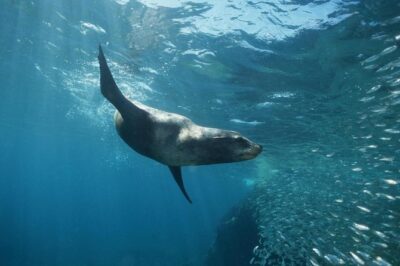 ★ 5.02-Tank Scuba Dive in Cabo San Lucas Reserve for Certified DiversFrom $138263 reviews
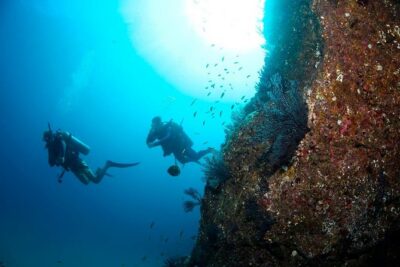 ★ 5.0Beginner Scuba Diving in Cabo San LucasFrom $142247 reviews
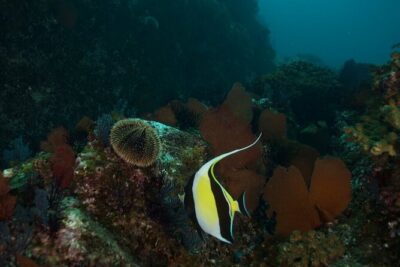 ★ 5.02 Tank Dive – Certified Divers (Santa Maria Bay & Chileno Bay)From $140162 reviews
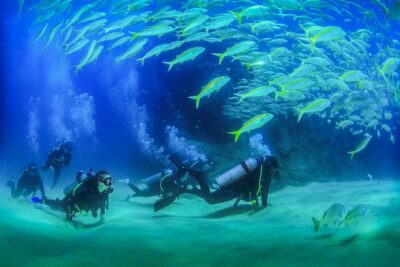 ★ 4.5Learn to Scuba Dive in Cabo San Lucas with PADIFrom $129157 reviews
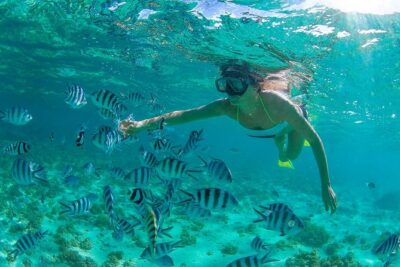 ★ 4.5Cabo Pulmo National Park Snorkel Expedition from Cabo San LucasFrom $279134 reviews
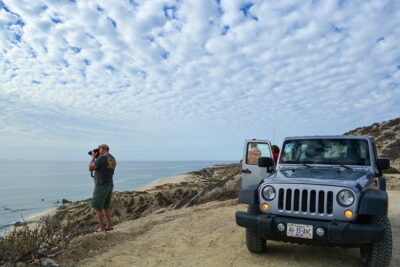 ★ 5.0Private Jeep Tour Cabo PulmoFrom $65087 reviews
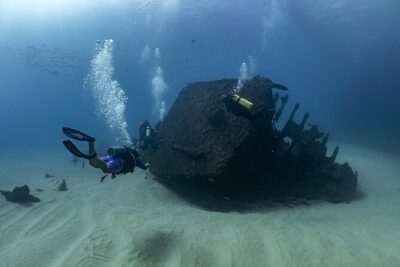 ★ 5.0Scuba DivingFrom $14980 reviews
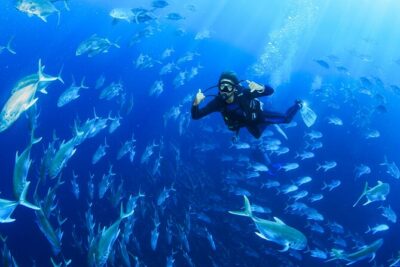 ★ 4.5Cabo San Lucas Certified 2 Tank Dive at the Famous Arch and Land’s EndFrom $12968 reviews
Browse the lists this tour appears in